CTO & COO
Replace Expensive BI
Enterprise BI tools were designed for dedicated data teams with months to spend on implementation. Dreambase gives mid-market and enterprise teams self-serve analytics directly from Supabase at a fraction of the cost, with no analysts or engineers required to maintain it.
We're paying six figures a year for Tableau and it still takes a data analyst a week to build a new dashboard.
The Value
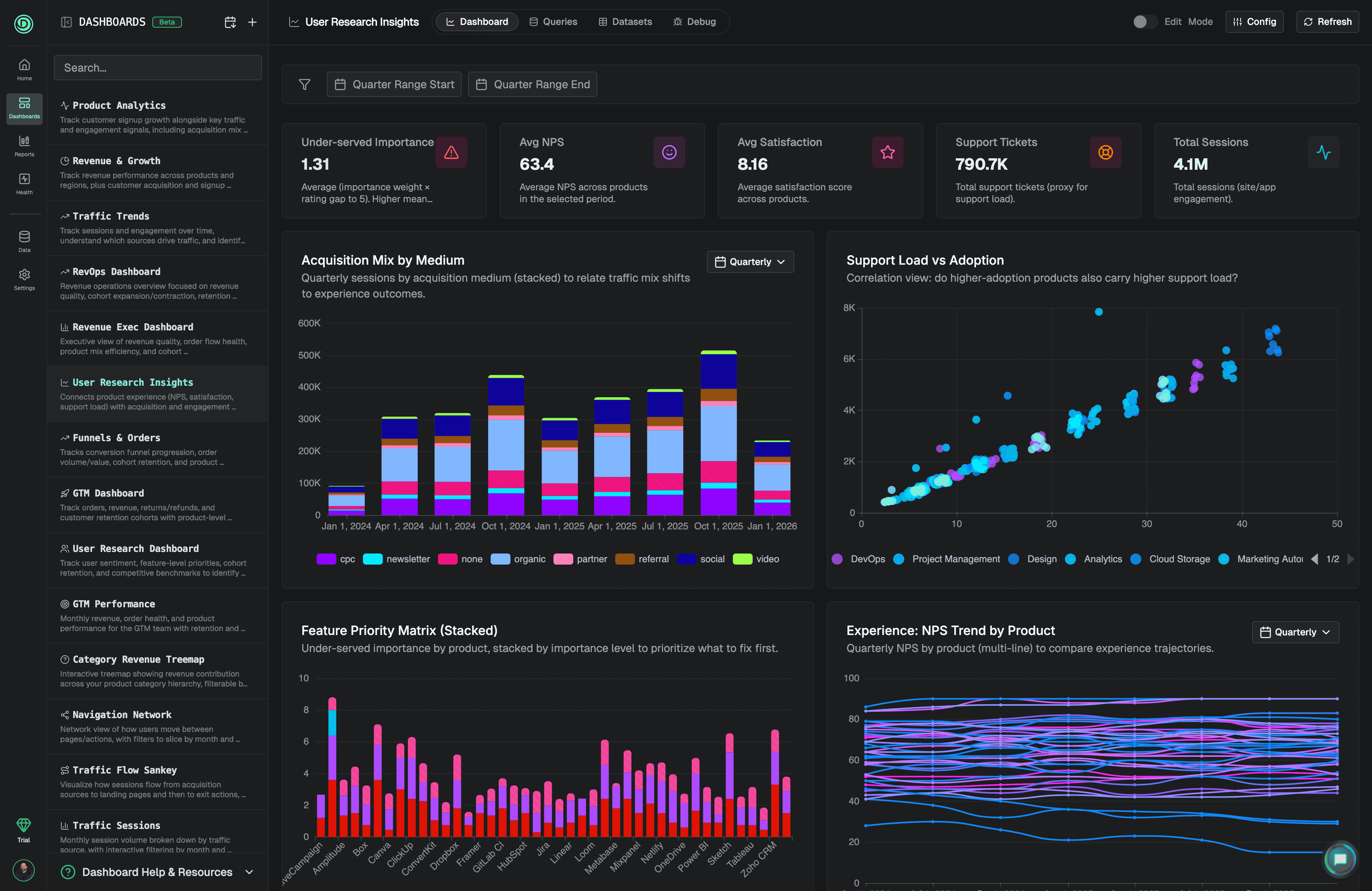
Production-grade analytics for every stakeholder, without the enterprise BI price tag or the dedicated team to run it.
Tableau, Looker, and Power BI require data engineers to build models, analysts to maintain dashboards, and months of implementation before anything is useful. Dreambase connects directly to Supabase and gives every stakeholder accurate self-serve analytics from day one.
The Problem
Enterprise BI tools solve the wrong problem for most organizations.
Implementation takes months before a single useful dashboard is live
Dashboards require a dedicated analyst to build and maintain
Non-technical stakeholders still cannot self-serve despite the tool being in place
Licensing costs scale with users and data volume in ways that become unsustainable
The tools were designed for data warehouse architectures, not Supabase-native products
The Dreambase Solution
Topics as the Enterprise Semantic Layer
The Data Dictionary gives enterprise teams a controlled, governed semantic layer. Metric definitions are centrally managed, version-controlled, and consistently applied across every dashboard and report organization-wide.
Self-Serve for Every Department
Finance, product, marketing, and operations all access their own dashboards without filing requests to a central data team. Each team works within their own Topics context while drawing from the same underlying Supabase source.
Seamless Integrations
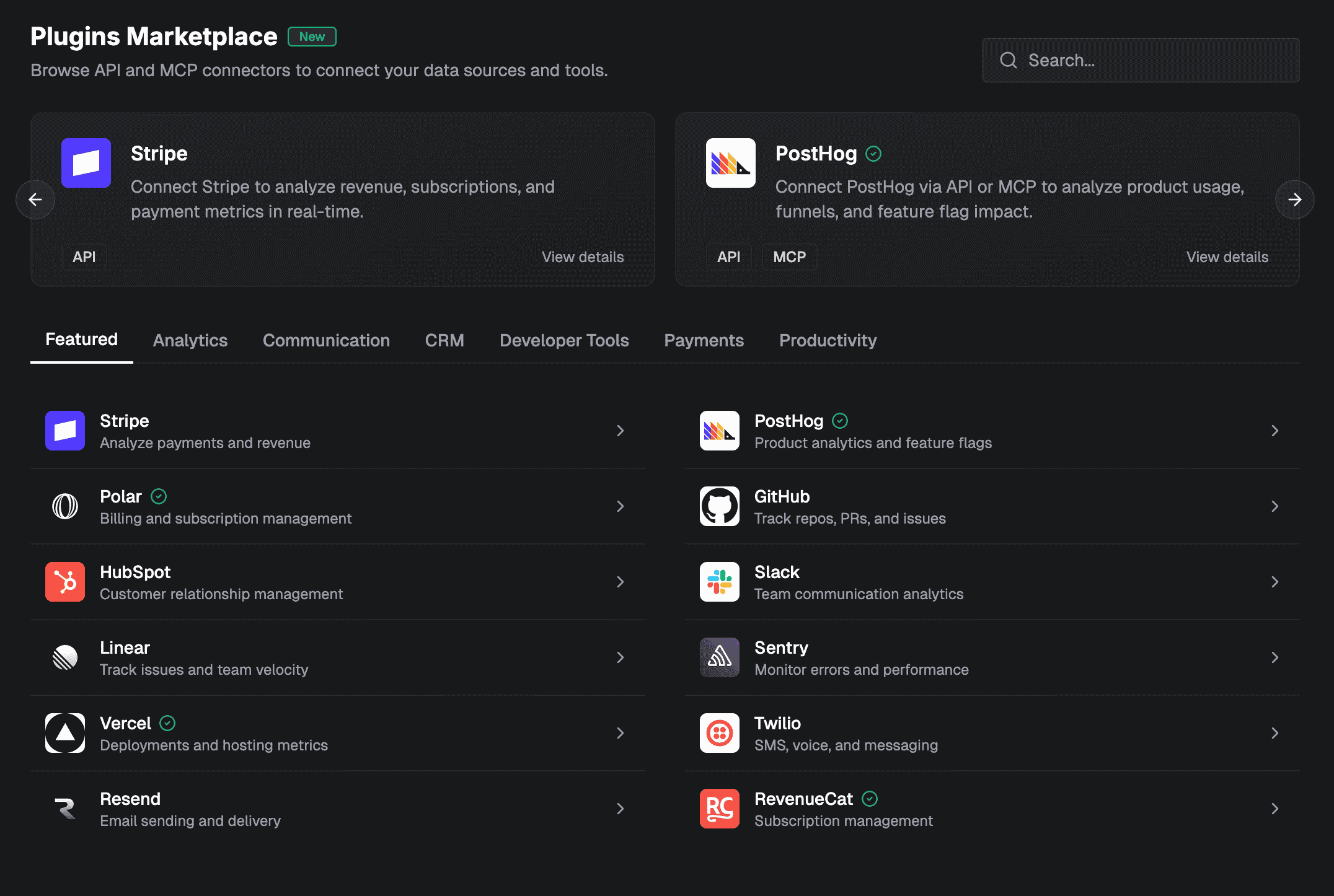
Enterprise workflows span multiple systems. Connect Salesforce, HubSpot, Stripe, and any other platform via MCP or API integration and unify them with your Supabase product data in one analytics workspace.
Before & After
Before | After |
|---|---|
6-month BI implementation before first dashboard | First dashboard live within the day |
Dedicated analyst required to build every new view | Any department head builds their own dashboard |
$3,000-10,000 per month in licensing fees | Fraction of the cost with no per-seat penalties |
Dashboards built on data warehouse copies of production data | Live data directly from Supabase at all times |
Non-technical stakeholders still cannot self-serve | Every stakeholder has self-serve access |
Opaque queries with no visibility into what runs | Full query transparency and audit trail |
AI-native Intelligence has entered the chat
Enterprise analytics has a credibility problem. Organizations spend six figures a year on Tableau or Looker, go through a months-long implementation, hire analysts to maintain the dashboards, and still end up with finance leadership asking their data team for a one-off report every other week because the self-serve experience is too complicated for non-technical users.
The tools were not designed for the way most organizations actually work. They were designed for enterprises with dedicated data engineering teams, established data warehouse infrastructure, and months of capacity to spend on implementation before anything useful appears. For organizations that run on Supabase, that architecture is an expensive mismatch.
Dreambase connects directly to Supabase. No data warehouse. No ETL pipeline. No modeling project before the first dashboard. The data that powers your product powers your analytics on the same day.
The Topics and Data Dictionary system gives enterprise teams the governed semantic layer that makes self-serve analytics safe to deploy broadly. Metric definitions are defined centrally by whoever owns data governance, version-controlled, and applied consistently across every dashboard and report across the organization. When the CFO pulls a revenue dashboard and the head of product pulls an engagement dashboard, they are both working from the same underlying definitions. Consistency is built into the architecture, not enforced through manual review.
From that foundation, every department gets self-serve access appropriate to their role. Finance accesses revenue and cost dashboards. Product accesses feature adoption and retention. Marketing accesses campaign attribution and conversion. Operations accesses SLA and support metrics. Each team works within their own Topics context without visibility into data that does not concern them, and without needing a data analyst in the room to build the view for them.
For security and compliance teams, the architecture provides clear audit trail capability. Dreambase connects to Supabase read-only. Every query that runs against the database is visible and reviewable. Datasets are cached in Supabase Storage rather than exported to third-party platforms. Data does not leave your infrastructure.
The total cost of ownership comparison with enterprise BI tools is where the business case becomes straightforward. A Tableau or Looker implementation at scale typically includes licensing fees, implementation consulting, ongoing analyst headcount to maintain dashboards, and the opportunity cost of the months-long deployment timeline. Dreambase replaces all of that with a direct Supabase connection and a semantic layer your existing team can set up and own.
The first dashboard takes less than a day. The last one your analysts build before they can focus on higher-value work takes less than a week.
Replace Expensive BI