I shipped two weeks ago and I have no idea if anyone is actually using the product.
PMF Insights
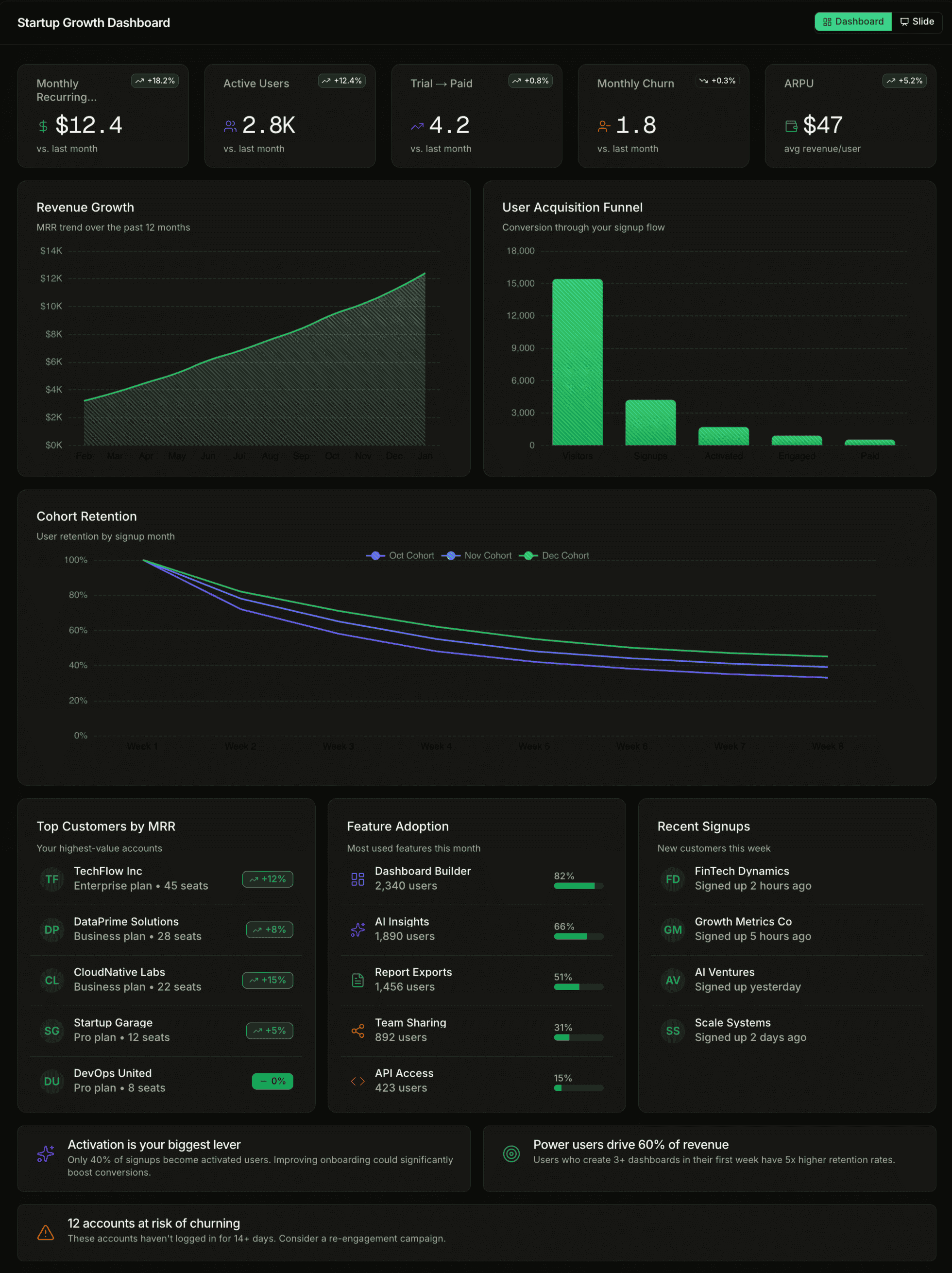
You shipped your first product on Supabase and users are signing up. Now what? Dreambase connects in 30 seconds and shows you exactly what your early users are doing, with no analytics setup, no tracking code, and no SQL required.
The Value
Understand your first users in seconds, directly from the Supabase database you already have.
Solo founders and indie developers do not need a full analytics stack. They need fast answers about whether users are activating, which features they are using, and where they are getting stuck. Dreambase gives them that instantly from the data already in Supabase.
The Problem
Early-stage products collect valuable user data that founders never actually look at.
User and event records accumulate in Supabase but there is no easy way to query them
Setting up Mixpanel or Amplitude requires instrumentation time better spent on the product
SQL skills are needed to answer even basic questions about user behavior
No time or budget for analytics tooling before product-market fit
Database health issues accumulate fast when you are building and iterating daily
The Dreambase Solution
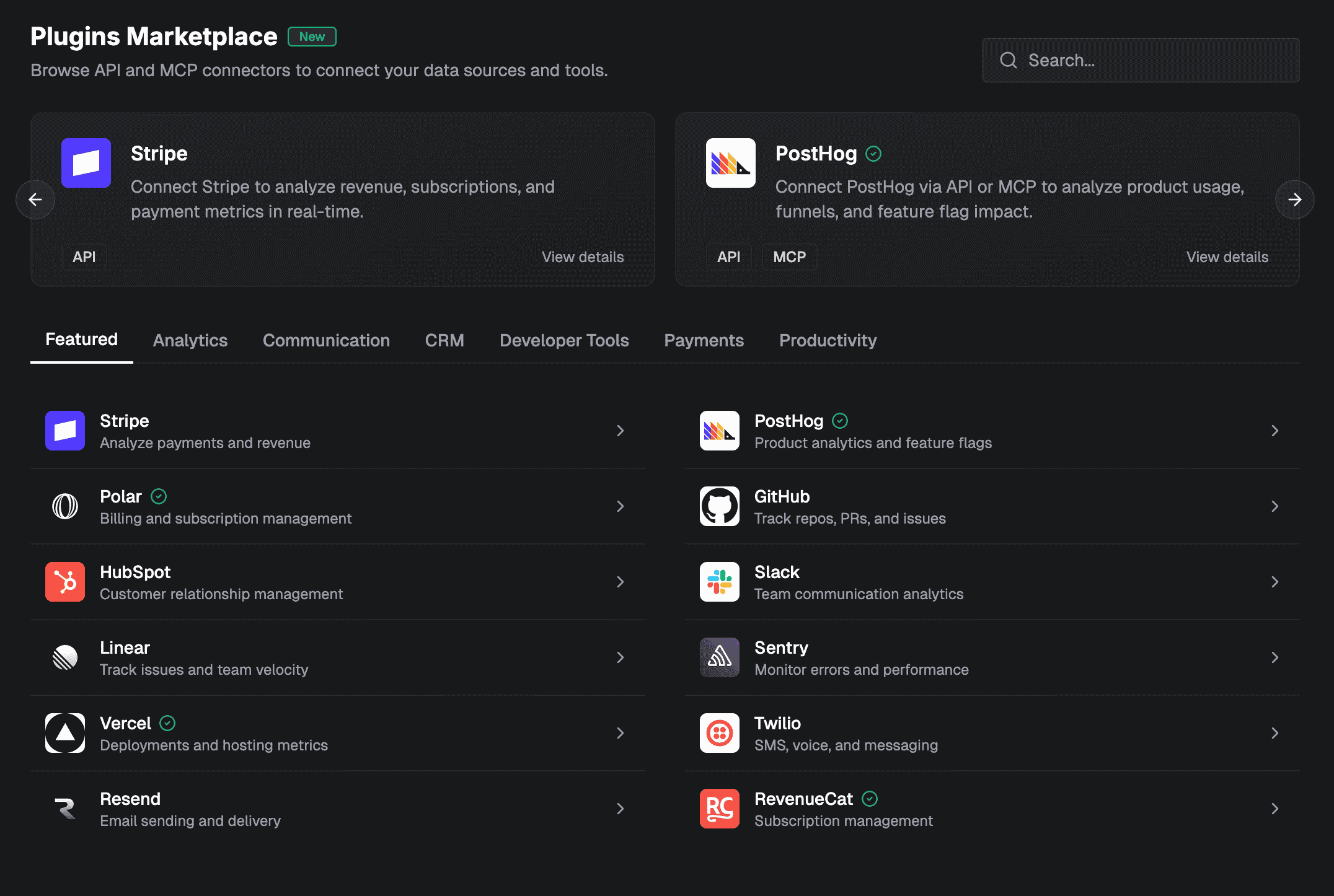
30-Second Supabase Connection
Connect your Supabase project, define your first Topics, and generate your first dashboard in a single session. No instrumentation. No third-party libraries. No setup overhead.
Quick Insights from Analyst Agent
Ask the AI assistant what your early users are doing and get an instant chart from your Supabase data. No dashboard required, no SQL, no waiting.
Reports with Insights
When generating reports and dashboards, our agents will call out anomalies, outliers, and interesting data insights you might otherwise miss.
Grows With You
As your product matures, Dreambase grows with it. The same platform that answers your first user questions becomes the production analytics layer for your entire team when you scale.
Before & After
Before | After |
|---|---|
User data in Supabase with no way to see it | Instant charts from your actual user records |
Weeks of instrumentation before analytics works | First insights in the same session you connect |
SQL needed to answer basic behavior questions | Ask in plain language, get a chart in seconds |
Database health issues discovered in production | Free Report Card catches them before users do |
Expensive analytics tools built for larger teams | $29 per month covers everything you actually need |
Flying blind on whether the product is working | Clear view of activation, usage, and retention |
Get enterprise analytics from Day 0
There is a specific kind of anxiety that comes with shipping your first product. You built it, you launched it, users are signing up. The database is filling up with records. Something is happening. But you do not actually know what.
Are users activating? Are they coming back? Which features are they using and which ones are they ignoring? Where are they getting stuck? These are the questions that determine whether the product has a future. And for most solo founders and indie developers, the answers are sitting in a Supabase database they do not have time to query.
Dreambase makes those answers available in seconds without any setup work.
Connect your Supabase project and Dreambase scans your schema automatically. Define a few Topics to tell the AI what your key concepts are, such as what constitutes an active user or what counts as an activation event, and from that point forward you can ask questions in plain language and get instant charts from your real data. No tracking code to install. No instrumentation to set up. No SQL to write. The answers come from the user and event records you are already collecting.
For early-stage founders, Quick Insights is the feature that changes the daily habit. Instead of opening a terminal and writing a query to check how many users activated yesterday, you type the question into the Dreambase homepage and a chart appears. Instead of wondering which feature is getting used, you ask and see the data immediately. The friction between a question and an answer drops to near zero.
The free Supabase Report Card is the other thing every early-stage founder should run the moment they connect. Building fast with Cursor, Lovable, or v0 means schema gets created quickly and iterated on daily. RLS policies get skipped on tables that should have them. Indexes do not get added until queries start slowing down. The Report Card catches all of it immediately and gives you a Fix in Cursor prompt for every finding so the remediation takes minutes, not hours.
The bigger picture is about what happens next. The founders who understand their early users fastest iterate fastest. They know which features to double down on and which ones to cut. They know where the activation funnel breaks and they fix it before churn becomes a problem. They make decisions from data instead of gut feel from the week they shipped.
That information is already in your Supabase database. Dreambase just makes it visible.
PMF Insights